
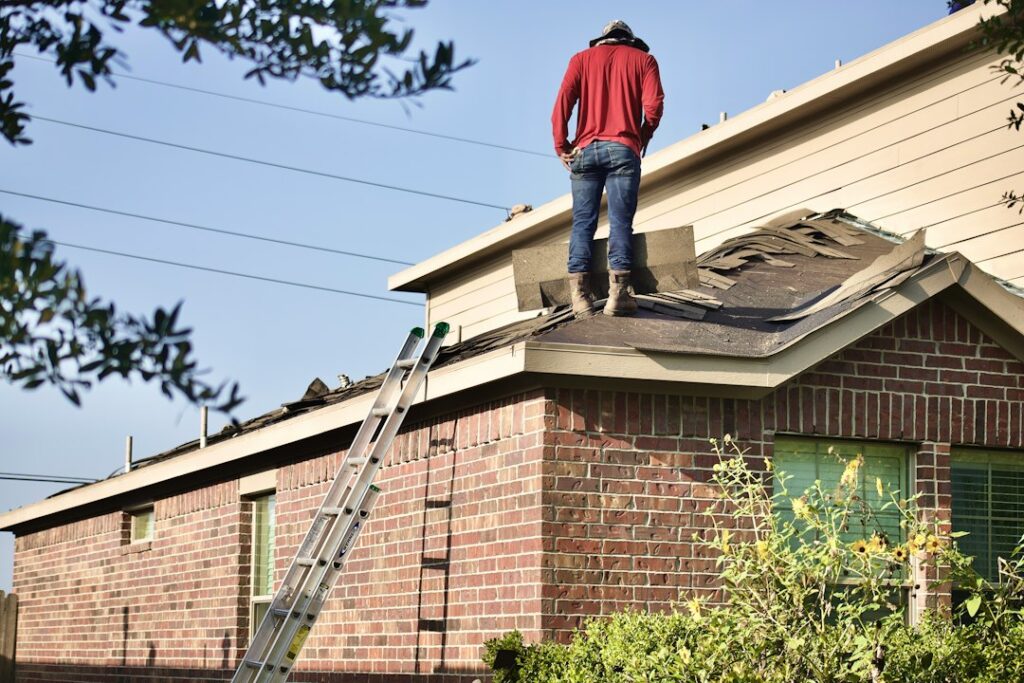
Does homeowners insurance cover roof damage?
Homeowners insurance generally covers sudden, accidental roof damage caused by a covered event, such as wind, hail, falling trees, fire, or the weight of snow. It usually does not cover a roof that leaks because it has reached the end of its useful life or has been neglected.
The exact answer depends on the policy language, the cause of damage, the roof’s condition, and the deductible. A roof inspection after a storm may show several issues at once, but insurance typically focuses on the damage directly caused by the covered event rather than older deterioration.
For example:
- Wind tears shingles from an otherwise serviceable roof: coverage may apply.
- A tree limb punctures the roof during a storm: the roof and related interior damage may be covered, subject to policy terms.
- Water enters through worn-out flashing that has been leaking for months: the repair may be excluded as maintenance.
- An aging roof fails during heavy rain without evidence of a covered event: coverage may be limited or denied.
A homeowners policy is not a maintenance contract. Regular upkeep, minor repairs, and eventual roof replacement are normally the homeowner’s responsibility.
How do insurers distinguish storm damage from wear and tear?
Insurers generally look for evidence that an outside event caused the loss. They may consider the age of the roof, the type and condition of the shingles, the location of missing materials, weather records, photographs, interior water staining, and whether similar damage appears across exposed sections.
Wear and tear develops gradually. Common examples include:
- Brittle or curling shingles
- Long-term granule loss
- Rot around roof edges or penetrations
- Deteriorated flashing
- Repeated leaks
- Poorly maintained gutters that contribute to water intrusion
- Damage caused by moss, animals, or insects
Storm damage is more likely to appear as a distinct impact, torn or displaced shingles, punctures, broken roofing materials, or damage concentrated on wind-facing areas. Even then, an insurer may determine that pre-existing deterioration contributed to the loss.
Photographs taken before and after severe weather can be useful. They may help show the roof’s prior condition and establish when a change occurred. Dated maintenance records, receipts, and notes about previous leaks can also help explain the history of the roof.
What should a homeowner do after a roof storm?
Safety comes first. Do not climb onto a wet, icy, steep, or visibly unstable roof. From the ground or from safe interior locations, document what can be seen without creating additional risk.
After suspected storm damage:
- Take photographs of fallen branches, exposed roofing, damaged gutters, ceiling stains, and water on floors.
- Use containers to catch active interior leaks and move furniture or belongings away from the affected area.
- Notify the insurance company promptly if the damage may lead to a claim.
- Keep receipts for reasonable temporary measures, such as emergency tarps or materials used to prevent additional damage.
- Avoid permanent repairs or disposal of damaged materials until the insurer has had a reasonable opportunity to inspect them, unless immediate action is necessary for safety.
- Do not exaggerate damage or claim unrelated problems as part of the storm loss.
Temporary protection is different from permanent replacement. Covering an opening to keep rain out may be necessary, while replacing the entire roof before inspection can make it harder to establish what happened.
What does the deductible mean for a roof claim?
The deductible is the portion of a covered loss that the homeowner pays before insurance contributes. If covered repairs cost $8,000 and the deductible is $2,000, the insurer may pay up to the eligible amount above the deductible, subject to policy limits and claim decisions.
The declarations page may list more than one deductible. A standard deductible may apply to many claims, while separate wind, hail, or hurricane deductibles can apply in particular circumstances. These may be expressed as a fixed dollar amount or as a percentage of the dwelling coverage limit.
A percentage deductible can be larger than expected. For example, a 2% deductible on a dwelling limit of $300,000 would equal $6,000. The relevant amount and triggering conditions should be confirmed in the policy rather than assumed from a general insurance discussion.
What is replacement cost versus actual cash value?
Replacement cost coverage is intended to pay the cost to repair or replace covered property without subtracting depreciation, but policy conditions usually apply. Some policies require the work to be completed within a specified period before the withheld depreciation is released.
Actual cash value generally means replacement cost minus depreciation for age and condition. An older roof may therefore receive substantially less than the price of a new roof, even when the underlying loss is covered.

Roof coverage can also vary by roof age, material, policy endorsement, and insurer underwriting rules. A policy may provide full replacement cost for some roof losses but actual cash value for older roofing or specific types of damage. The loss-settlement section is more useful than relying on the phrase “full coverage.”
Can an insurer cancel or limit coverage because of an old roof?
An insurer may ask about roof age and condition when issuing or renewing a policy. Some companies may require documentation, restrict certain types of roof coverage, apply actual-cash-value settlement, or decline to continue coverage if the roof presents a significant risk.
This does not necessarily mean every older roof is uninsurable. Roofing materials, installation quality, maintenance history, and observed condition all matter. A homeowner should review any renewal notice carefully, especially if it changes roof settlement terms, deductibles, exclusions, or inspection requirements.
A new roof or substantial roof improvement may affect eligibility for discounts, but the insurer may require documentation such as invoices, permits where applicable, photographs, or material details. A new roof does not automatically guarantee lower premiums.
What roof-related exclusions deserve special attention?
Several exclusions or limitations commonly affect roof and water claims:
Flooding: Standard homeowners insurance generally does not cover flood damage. Water entering from outside at ground level or rising over land may require separate flood coverage.
Sewer or sump-pump backup: This may require a specific endorsement and usually has its own limit and deductible.
Mold: Mold coverage can be limited, particularly when it results from long-term moisture, poor maintenance, or an excluded water event.
Ice dams: Resulting interior damage may be covered under some policies, while the cost of preventing or removing the ice dam may be treated differently.
Power failure: Food spoilage or damage from a utility interruption may depend on the cause and any special coverage.
Neglect: Damage that becomes worse because a known leak was not addressed may be reduced or excluded.
Homes in the Penn Yan area experience seasonal changes that can stress roofing systems, including freeze-thaw cycles, heavy wet snow, wind, and prolonged periods of moisture. Keeping gutters clear, watching attic ventilation, checking flashing, and addressing small leaks early can reduce the chance that a minor problem becomes a larger insurance dispute.
What should be reviewed before a problem occurs?
At least once a year, review the declarations page and the policy’s loss-settlement provisions. Check:
- Dwelling coverage compared with the current cost to rebuild
- Roof settlement method
- Standard and weather-related deductibles
- Exclusions for water, ice, mold, and maintenance
- Coverage for detached structures
- Additional living expense limits
- Any endorsements affecting the roof
- Requirements for notifying the insurer after a loss
Keep a basic home file with roof photographs, repair records, receipts, and notes about known issues. An inventory of household belongings can also help if a roof leak damages furniture, electronics, clothing, or other contents.
The most useful question is not simply, “Is the roof covered?” It is: What caused the damage, what does the policy exclude, how will the roof’s age affect payment, and what deductible applies? Those details usually determine whether a roof problem becomes an insurance claim, a maintenance expense, or a combination of both.
