
Roof eaves are the lower edges of a roof that extend beyond the exterior walls. They are easy to overlook, but they help move rainwater away from the structure, protect siding and windows, support attic ventilation, and reduce weather-related wear on the building envelope.
For homes in Penn Yan, NY, eaves are especially useful because roofs must handle changing conditions throughout the year, including heavy rain, freeze-thaw cycles, snow, wind, and periods of high humidity.
What exactly are roof eaves?
A roof eave is the portion of a roof that projects past the outside wall. The underside is often called the soffit, while the outer edge may include a fascia board and gutter system.
These parts work together:
- Roof overhang: Extends beyond the wall and helps shield the exterior.
- Soffit: Covers the underside of the overhang and may contain ventilation openings.
- Fascia: The vertical trim board along the roof edge, often supporting the gutter.
- Gutter and downspout: Collect and direct runoff away from the foundation.
Not every roof has the same eave design. Older homes may have wide, open overhangs, while some newer or remodeled homes have shorter eaves with enclosed soffits.
How do eaves protect a house from water?
The main water-management function of an eave is to move roof runoff beyond the wall line. Without an overhang, rainwater can run directly down siding, around window openings, and along the foundation wall.
A properly designed eave helps:
- Keep rain off siding and exterior trim
- Reduce water entry around windows and doors
- Limit splashback onto lower wall surfaces
- Move runoff into gutters or away from the foundation
- Reduce soil erosion near the base of the house
The overhang alone does not replace gutters. During a heavy storm, water may still fall from the roof edge in a concentrated sheet. Gutters collect that water and downspouts carry it away. If the gutter is clogged, sagging, or disconnected, the eave area may experience repeated wetting even though the roof itself appears sound.
Why are eaves important during winter?
Eaves influence how snow and ice affect the roof edge. In cold weather, heat escaping from the attic can warm the upper portion of the roof while the eave remains colder. Meltwater may then refreeze near the roof edge, contributing to an ice dam.
An ice dam can block normal drainage and force water beneath shingles or into roof-edge materials. Warning signs may include:
- Icicles forming repeatedly along one section of the roof
- Water stains near exterior walls or ceilings
- Damp insulation near the eaves
- Peeling paint or swelling trim below the roof edge
- Gutters pulling away after snow or ice buildup
Eaves do not create ice dams by themselves. The risk is more closely related to attic insulation, air sealing, ventilation, roof geometry, weather conditions, and snow cover. A wide overhang may reduce some wall exposure, but it cannot correct an overheated attic.
Residents should also avoid standing beneath large ice formations or attempting to chop ice from the roof edge. Falling ice and damaged shingles create unnecessary hazards.
How do eaves support attic ventilation?
Many roof systems use intake ventilation near the eaves. Air enters through openings in the soffit, travels through the attic, and exits through higher ventilation areas.
This airflow can help:
- Reduce heat buildup in summer
- Lower excessive moisture in the attic
- Protect insulation from dampness
- Reduce condensation on roof framing
- Support more even roof temperatures in winter
Soffit vents must remain open to function. Common problems include insulation blocking the vent openings, paint covering perforations, nests or debris restricting airflow, and improperly installed insulation baffles.
Ventilation is a balanced system. Adding more openings at the eaves without providing suitable exhaust ventilation may not solve an attic moisture or heat problem. Likewise, roof ventilation should not be used as a substitute for repairing air leaks from the living space, such as gaps around light fixtures, plumbing penetrations, or attic access panels.
What damage commonly affects roof eaves?
Because eaves combine wood, metal, fasteners, sealants, and drainage components, several types of deterioration are possible.
Rot and moisture damage
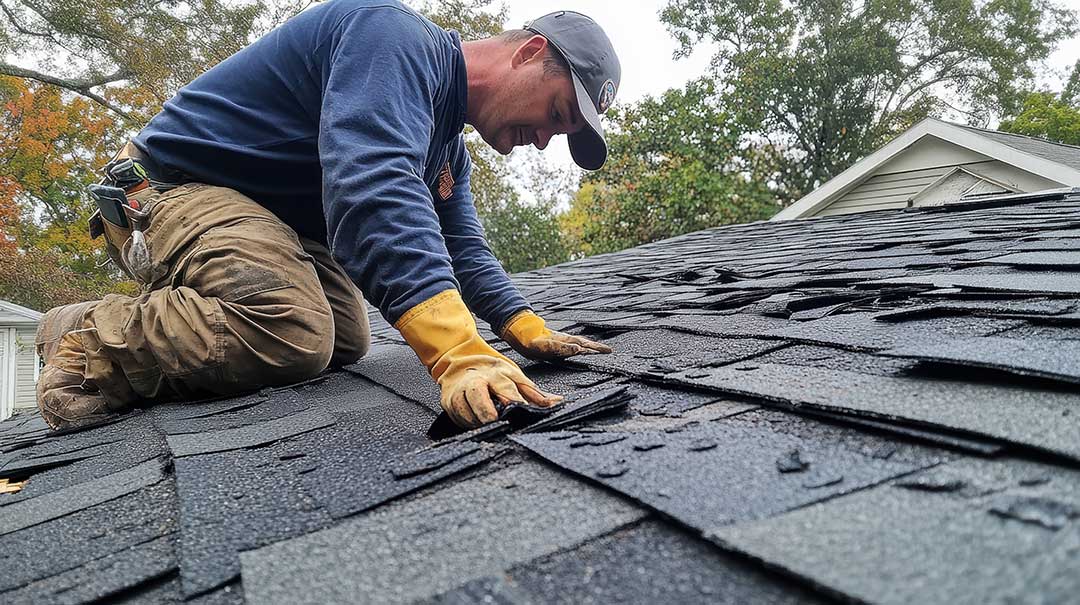
Fascia, soffits, and rafter tails can decay when water repeatedly reaches unprotected wood. Overflowing gutters, failed flashing, damaged shingles, and inadequate paint or sealant are frequent contributors.
Soft spots, dark staining, peeling coatings, or crumbling wood may indicate a longer-term moisture problem rather than a simple cosmetic issue.
Pest and wildlife entry
Open or damaged soffits can provide access for birds, insects, squirrels, and other animals. Once inside, wildlife may damage insulation, wiring, or ventilation materials.
Vent openings should allow airflow while preventing entry with suitable screening. Any animal nesting activity should be handled carefully because sealing an active opening can trap wildlife inside.
Wind damage
Strong winds can loosen soffit panels, fascia coverings, gutters, or flashing. A small opening may become larger during later storms, allowing wind-driven rain into the roof edge or attic.
After a severe wind event, look from the ground for hanging panels, uneven gutters, exposed fasteners, or sections that no longer align.
Gutter-related damage
Gutters attached to weakened fascia may pull loose. Conversely, a leaking or overflowing gutter can damage the fascia and soffit over time. This is why gutter maintenance and eave maintenance are closely connected.
What should homeowners check safely from the ground?
A ground-level inspection can identify early warning signs without requiring anyone to climb onto the roof. Look for:
- Sagging or separated gutters
- Water stains beneath the eaves
- Missing or loose soffit panels
- Peeling paint on fascia or trim
- Plants growing near downspout discharge areas
- Gaps where birds or animals may enter
- Shingles that appear lifted near the roof edge
- Icicles or wet areas that repeatedly appear in the same location
Gutters should be checked after leaves fall and again before periods of heavy rainfall or snow. Downspout outlets should direct water far enough away from the foundation to avoid repeated saturation.
Roof-edge work becomes hazardous when ladders, steep slopes, ice, electrical lines, or unstable surfaces are involved. Repairs that require climbing or exposing decayed structural wood may need qualified assistance for safety and accurate diagnosis.
Do all homes need wide eaves?
No. Eave width depends on the roof design, building style, lot conditions, local weather exposure, and drainage plan. Wider eaves can provide more protection for walls and windows, but they also require appropriate structural support, flashing, soffit design, and gutter placement.
A narrow eave can perform well when the roof edge, flashing, gutters, siding, and drainage are properly installed and maintained. Problems usually result from poor water control, blocked ventilation, weak materials, or deferred repairs rather than from eave width alone.
What is the difference between an eave and a rake?
An eave is the lower horizontal edge of a sloped roof, generally running along the side of the building where gutters are installed. A rake is the sloped edge along the gable end of the roof.
Both edges may have trim and protective coverings, but they serve different parts of the roof. Eaves commonly contain soffit ventilation, while rake edges usually do not. Understanding the difference helps describe problems accurately when inspecting a roof or discussing water stains, loose trim, or ventilation concerns.
A well-maintained eave quietly performs several jobs at once: it moves water away from walls, protects the roof edge, supports attic airflow, and helps the exterior withstand seasonal weather. Checking these areas periodically—especially before winter and after major storms—can reveal small drainage or ventilation problems before they spread into the roof, attic, siding, or foundation.
