
Why weather has such a strong effect on a roof
Weather affects a roof through repeated cycles of moisture, temperature change, wind, snow, and sunlight. A single storm may not cause visible damage, but years of exposure can weaken shingles, flashing, underlayment, gutters, and roof decking.
For homes in Penn Yan, seasonal changes are especially relevant. Cold winters, lake-effect snow, freeze-thaw cycles, spring rain, summer heat, and occasional strong winds each create different stresses. Understanding those patterns makes it easier to recognize problems before they become interior leaks or structural damage.
How winter cold and freezing temperatures damage roofing materials
Cold weather affects roofs mainly through contraction, brittleness, and trapped moisture. Many roofing materials become less flexible in low temperatures, making them more vulnerable to cracking when disturbed by wind, falling branches, or maintenance activity.
The larger concern is often the freeze-thaw cycle. Water enters a small opening, freezes, expands, and places pressure on the surrounding material. When temperatures rise, the ice melts, leaving a slightly larger gap for the next round of moisture.
Freeze-thaw damage may affect:
- Shingles with existing cracks or lifted edges
- Metal flashing around chimneys, vents, and roof intersections
- Mortar joints near masonry features
- Sealants around pipe boots and skylights
- Roof decking beneath damaged coverings
A roof does not need to be visibly old to experience this type of wear. Small defects created during one season may become active leaks during the next period of rain or melting snow.
What snow and ice do to a roof
Snow is not automatically harmful, but its weight increases as accumulation becomes deeper or wetter. Heavy, wet snow places more load on the roof structure than light, powdery snow. The risk is greater where snow collects unevenly, such as in roof valleys, behind higher roof sections, or below overhanging trees.
Ice dams create a different problem. They form when heat escaping from the attic warms parts of the roof, causing snow to melt. The water flows toward colder eaves, freezes again, and creates a ridge of ice. Meltwater can then back up beneath shingles and enter the roof system.
Common signs of ice-dam-related problems include:
- Water stains near exterior walls or ceilings
- Damp insulation at the roof edge
- Drips during sunny winter afternoons
- Icicles combined with interior moisture
- Peeling paint or deteriorating trim near the eaves
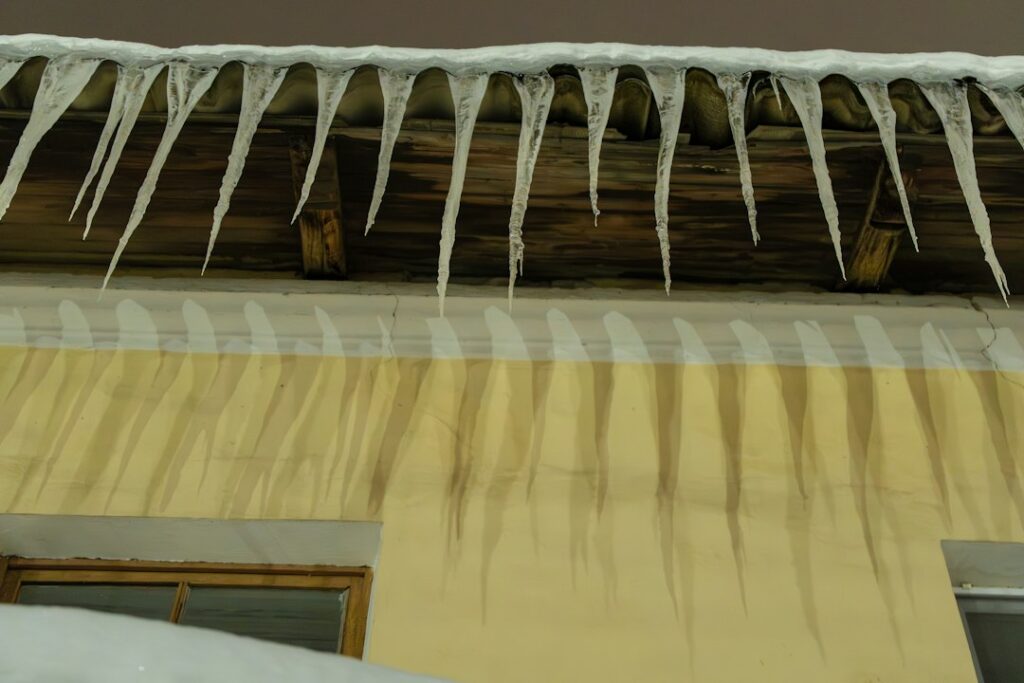
Large icicles do not always mean an ice dam is present, but they can indicate uneven roof temperatures or poor drainage conditions. Removing ice with sharp tools can damage shingles and create additional openings. Roof access during icy conditions also presents a serious fall hazard.
How wind affects shingles, flashing, and roof edges
Wind damage often begins at exposed edges. Shingles can lift, crease, or lose their protective surface when gusts get beneath a weak bond. Ridge caps, starter shingles, drip edges, and flashing are also vulnerable because they sit near transitions where wind pressure changes.
After a windy storm, visible signs may include:
- Missing shingles in the yard
- Shingle corners that appear raised
- Exposed underlayment
- Bent or displaced flashing
- Damaged vent covers
- Granules collected around downspouts
Wind does not always remove an entire shingle. A partially lifted shingle may still look acceptable from the ground but can allow water underneath during the next rain. Damage is also more likely around roof penetrations, dormers, valleys, and areas near large trees.
Branches that repeatedly scrape across the roof can wear away the surface coating and shorten the life of otherwise sound shingles.
Why spring rain reveals winter damage
Spring is often the season when hidden roof problems become obvious. Melting snow and frequent rain can expose weaknesses that remained inactive during dry or frozen periods.
Water may enter through a small roof opening and travel along rafters, insulation, or roof decking before appearing indoors. This means the location of a ceiling stain may not be directly beneath the actual entry point.
Spring inspections should pay attention to:
- Darkened or sagging roof decking visible from the attic
- Damp insulation
- Musty odors
- Water stains near roof penetrations
- Clogged gutters filled with granules or roof debris
- Soil erosion or standing water near downspout outlets
A leak that appears only during heavy rain may still indicate a significant problem. Slow leaks can damage insulation and wood before they produce a large interior stain.
How summer heat and sunlight wear down a roof
Sunlight gradually breaks down roofing materials through ultraviolet exposure. Dark roof surfaces can become much hotter than surrounding air, especially on clear summer afternoons. Repeated heating and cooling causes materials to expand and contract, placing stress on seams, fasteners, sealants, and shingle surfaces.
Heat and sunlight may lead to:

- Faded or uneven shingle color
- Loss of surface granules
- Cracking or curling
- Deteriorated rubber seals
- Dry, brittle flashing
- Higher attic temperatures
Adequate attic ventilation helps remove heat and moisture, but ventilation does not correct every roofing problem. Blocked soffit vents, poorly placed insulation, or inadequate air movement can contribute to excessive attic temperatures and winter moisture buildup.
A roof that looks dry from the outside may still have an attic ventilation issue. During warm weather, check for excessive heat, damp insulation, frost residue, or mildew-like odors in the attic.
Can humidity and rain cause roof problems without a major storm?
Yes. Repeated moisture exposure can be damaging even without dramatic weather. Persistent dampness encourages moss and algae growth, especially in shaded areas where roof surfaces dry slowly. Organic growth can hold moisture against roofing materials and make it easier for water to reach vulnerable seams.
Humidity also affects the attic. Warm indoor air can rise through gaps around light fixtures, wiring, plumbing openings, and attic hatches. If that air reaches a cold roof surface, condensation may form. Over time, condensation can resemble a roof leak and may stain wood or damage insulation.
Good roof performance depends on two separate systems:
- The exterior must shed rain and snow.
- The attic must manage heat and moisture.
A problem with either system can affect the other.
Which roof areas deserve the closest attention?
Some locations receive more weather exposure or are more likely to collect water. These areas deserve extra attention during seasonal checks:
- Valleys where two roof slopes meet
- Eaves and gutter lines
- Chimney and wall intersections
- Plumbing vent areas
- Skylight edges
- Roof sections beneath overhanging branches
- Low-slope areas where water drains slowly
- Places where an older roof meets a newer addition
From the ground, binoculars can help identify lifted shingles, missing sections, or damaged flashing without requiring someone to climb onto the roof.
When does weather damage require immediate attention?
A roof problem deserves prompt attention when water is actively entering the home, the ceiling is bulging, electrical fixtures are wet, a large section of roof covering is missing, or structural components appear to sag.
During severe weather, safety comes first. Avoid climbing onto a wet, icy, or snow-covered roof. If water is near electrical wiring or fixtures, shut off power to the affected area only if doing so is safe.
Weather-related roof maintenance is mostly about noticing small changes early. Regular observation after strong wind, heavy snow, and prolonged rain can help distinguish ordinary seasonal wear from damage that is allowing moisture into the building.
